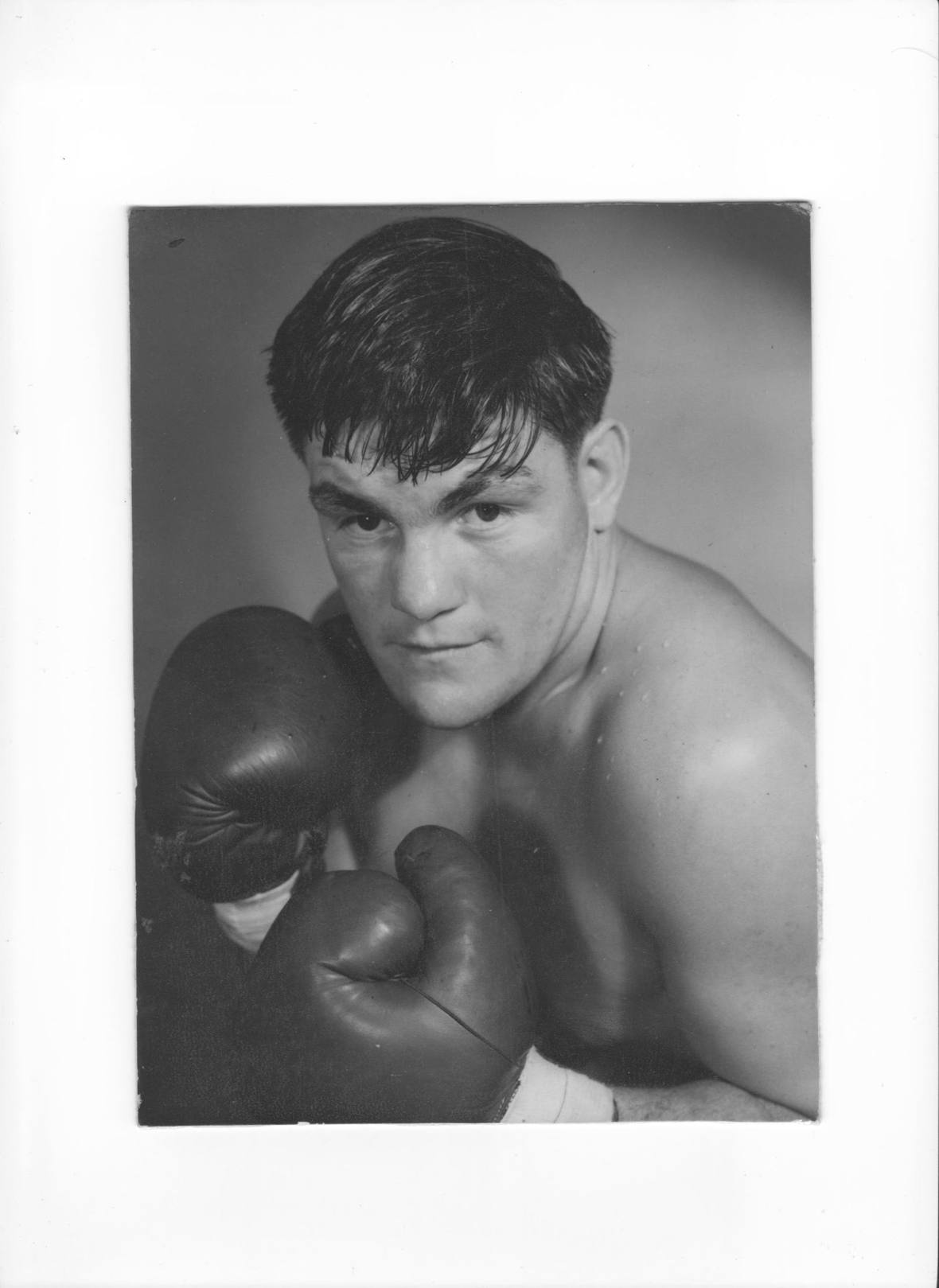
The Constable Who Could Punch
Before the titles, there was a young police constable from Bethlehem with a straight left and a wrestler’s balance.
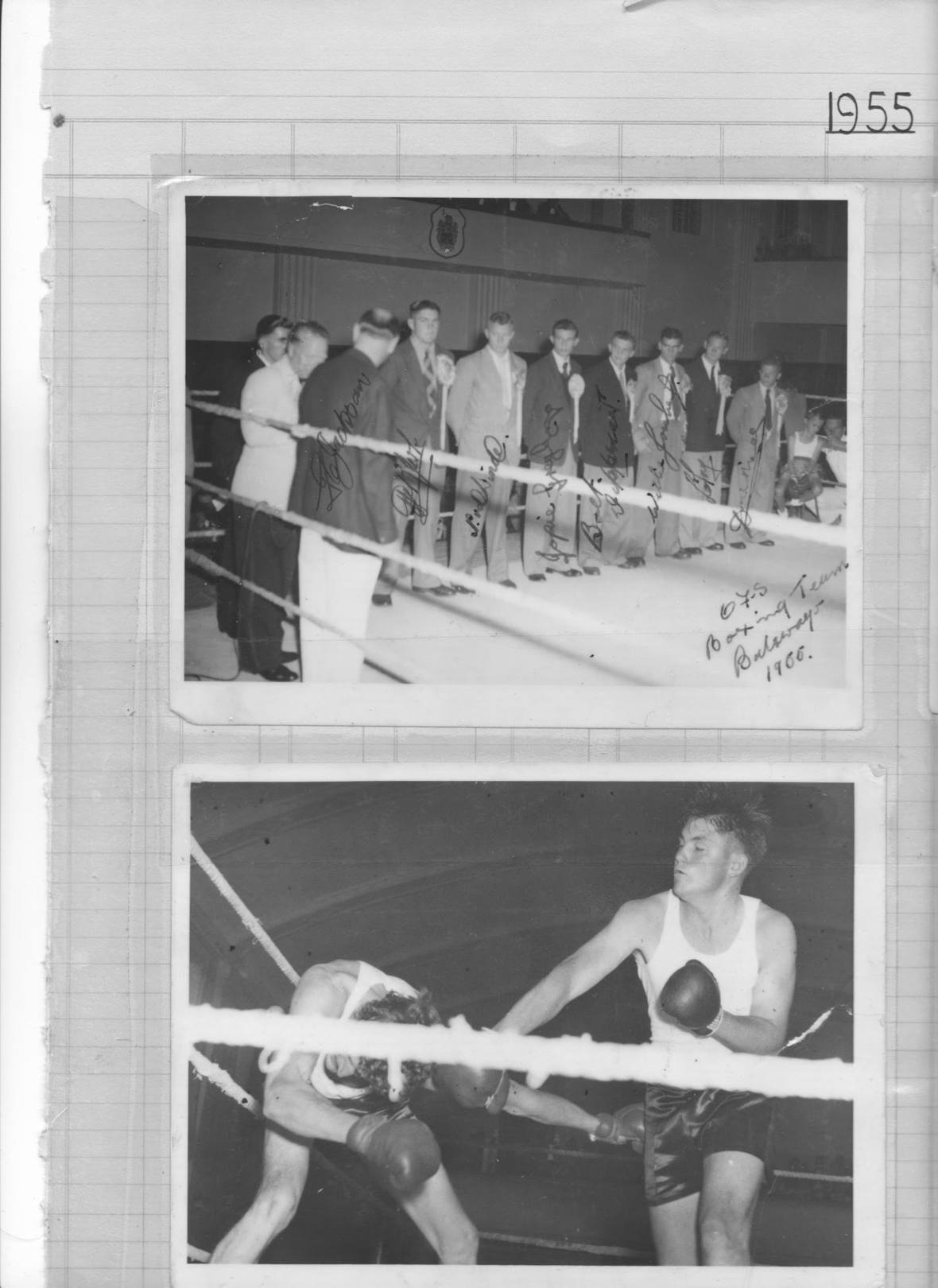
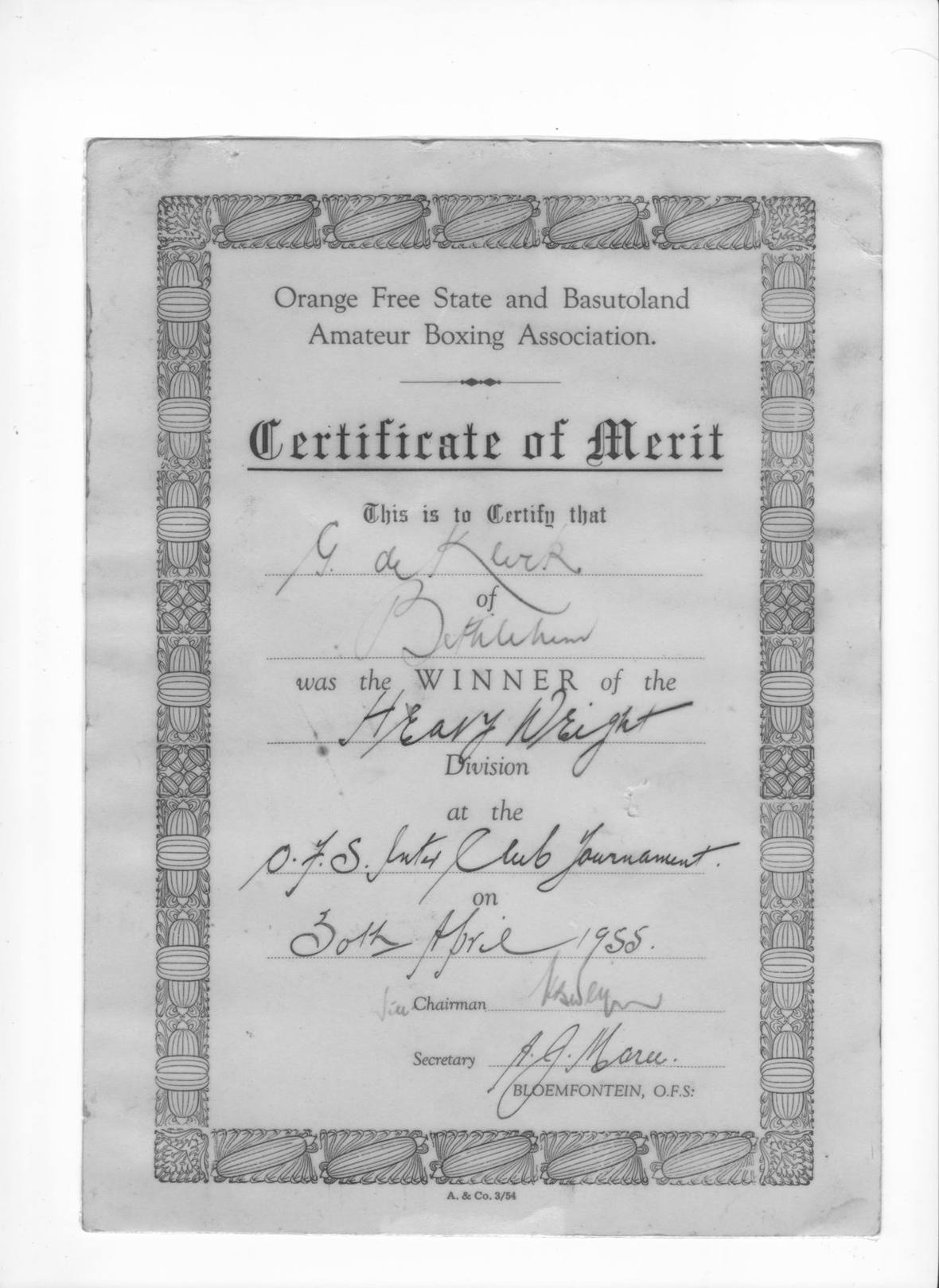
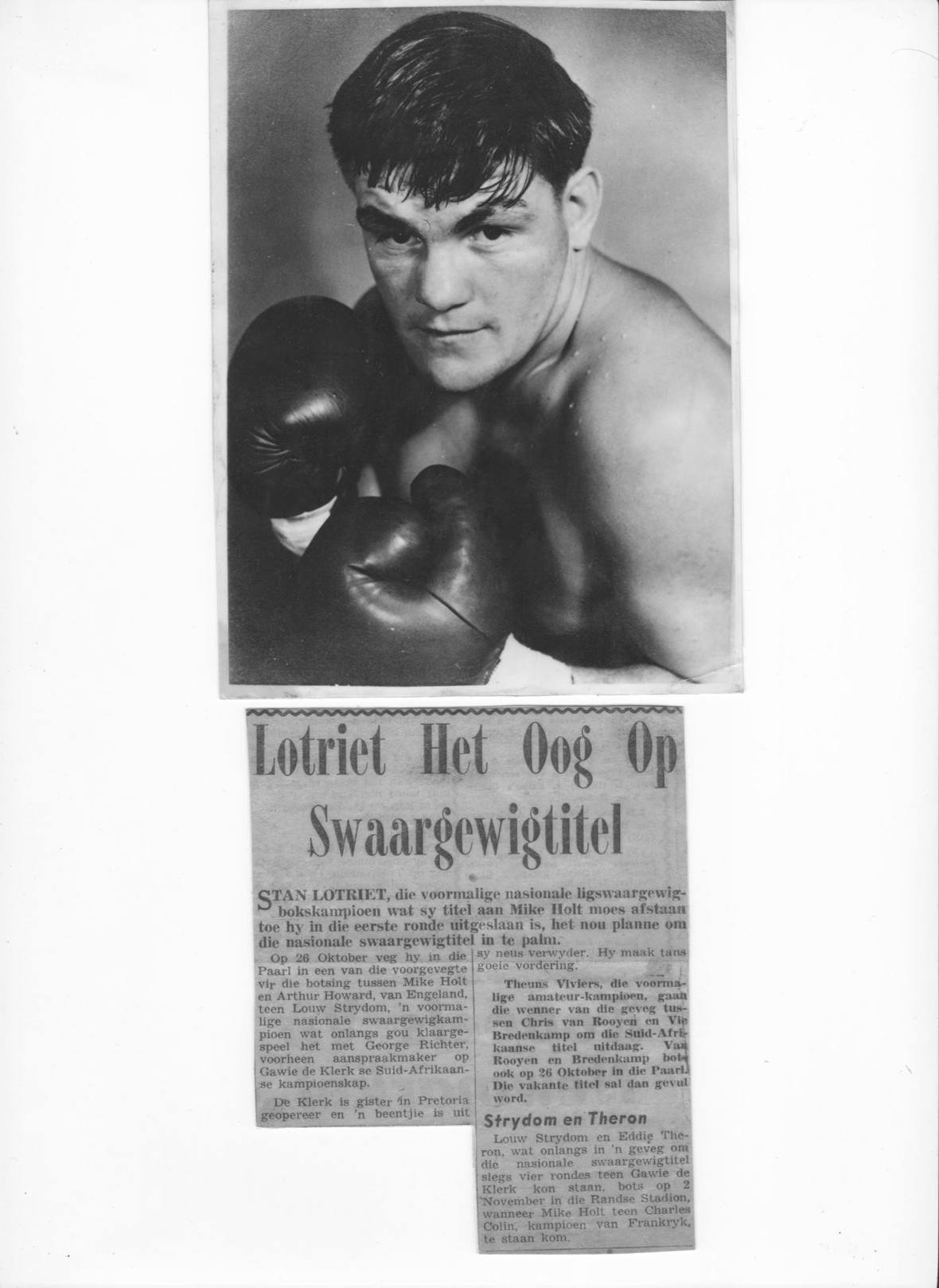
He boxed for the Springbok Amateur Boxing Club and carried home Free State titles. In the police tournaments he was already, in one reporter’s words, “a youngster of promise”, dropping a man three times in a single round. By 1955 he owned the heavyweight division of the O.F.S. Inter-Club Tournament and travelled with the provincial team as far as Bulawayo.
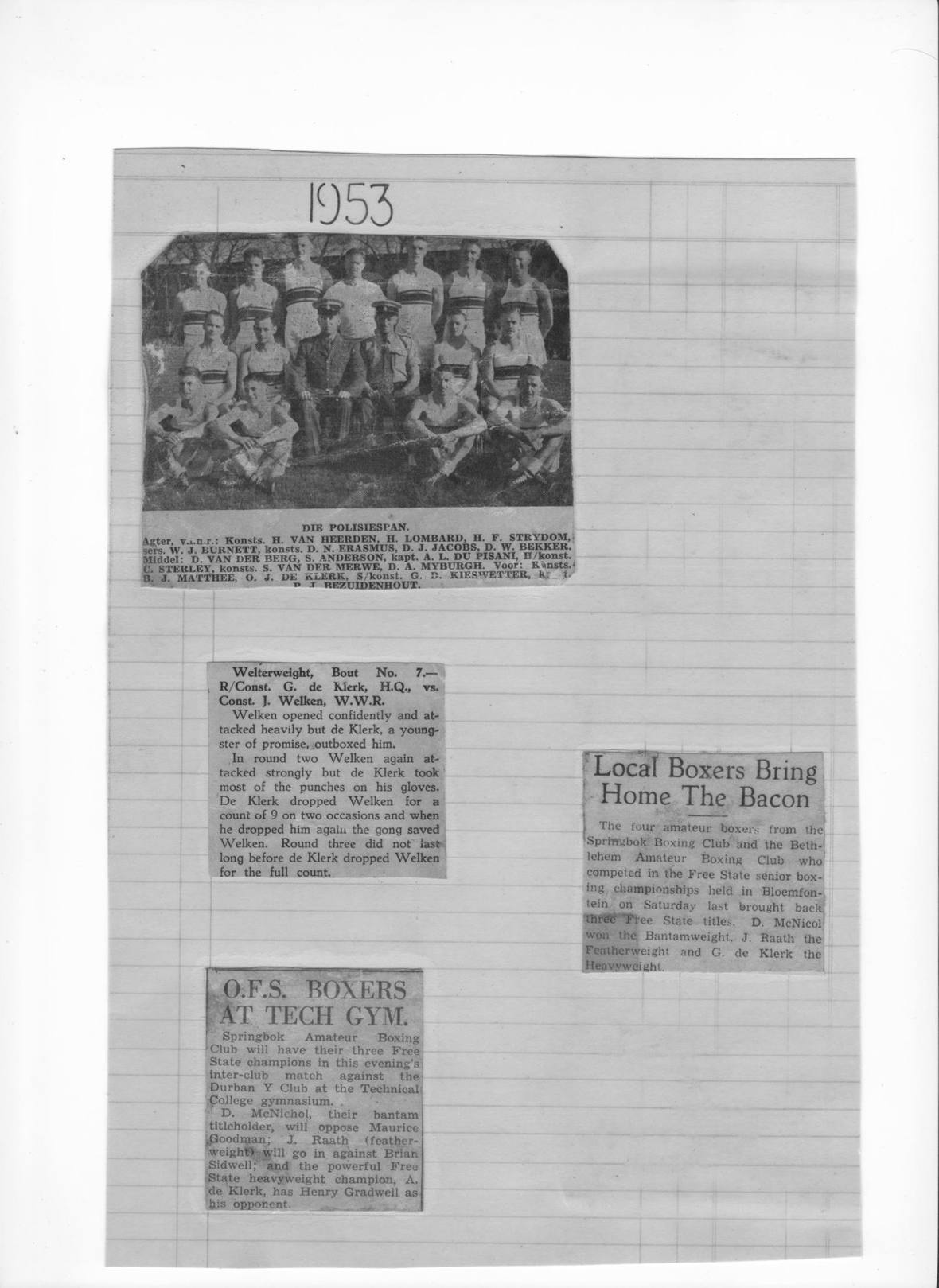
“De Klerk, a youngster of promise, outboxed him… and dropped Welken for the full count.”Bout report, Police Championships, 1953
Turning Professional
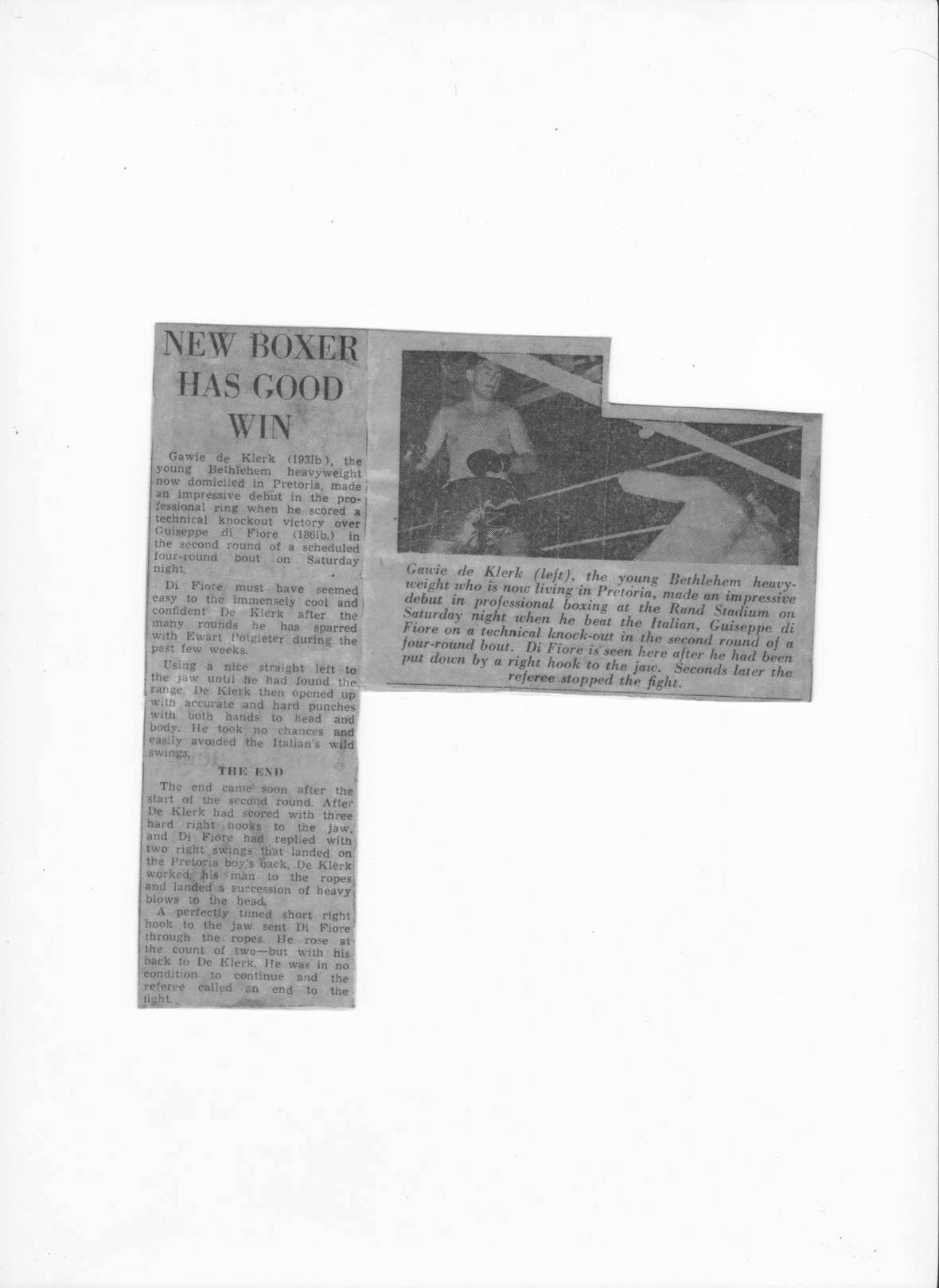
In April 1956 he stepped through the ropes at the Rand Stadium for his first professional fight, and stopped his man inside two rounds.
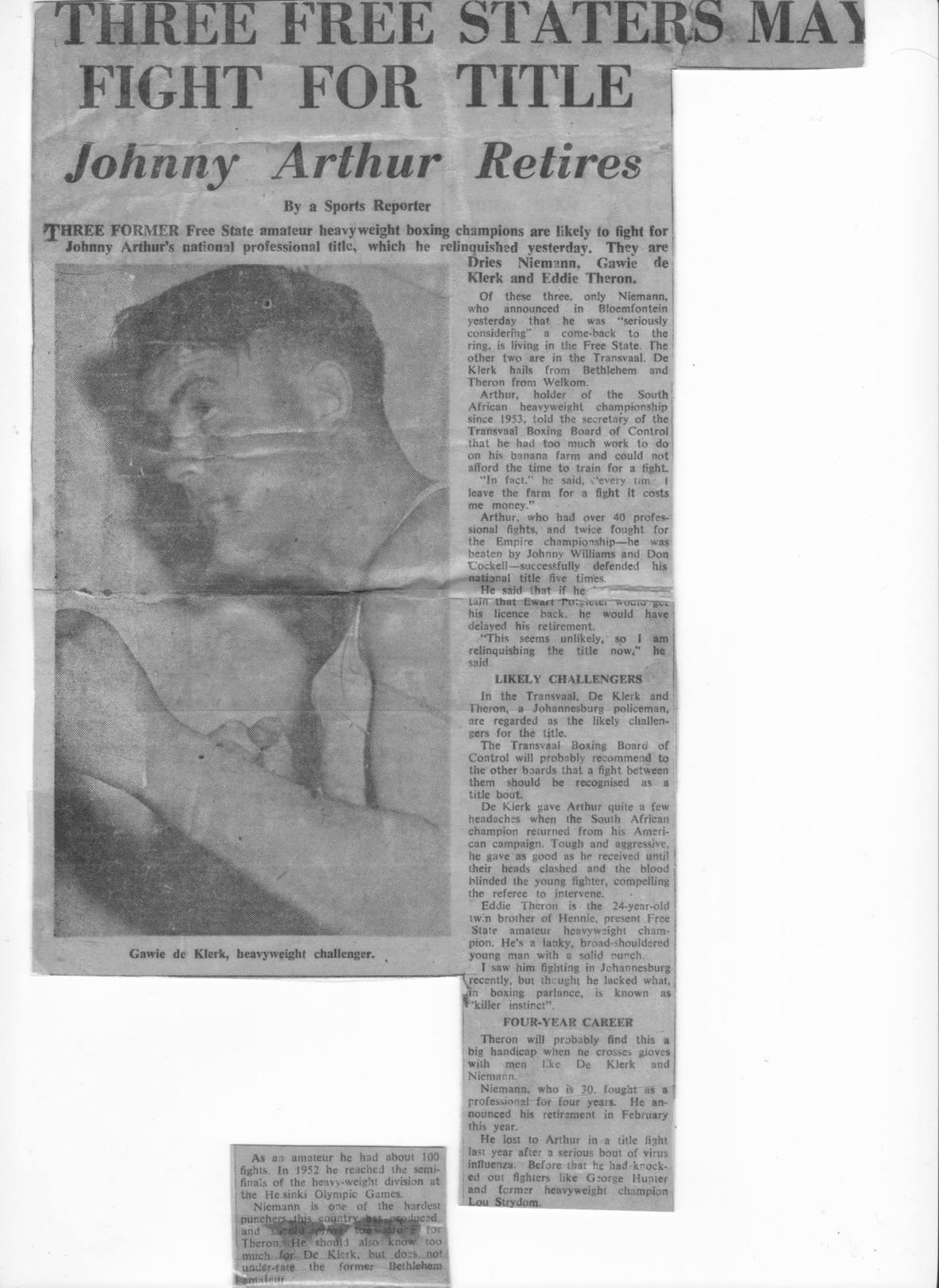
Sharpened by sparring the towering Ewart Potgieter, the “young Bethlehem heavyweight now domiciled in Pretoria” made an impressive debut, halting the Italian Giuseppe di Fiore in the second round. Within months Johnny Arthur relinquished the national crown, and the newspapers began listing a new contender by name.
That October, far from the ring lights, came a quieter blow. His father, Gabriel Johannes “Gawie” de Klerk of Paul Roux, the man whose name he carried, died suddenly on the road home from Virginia. The son fought on.
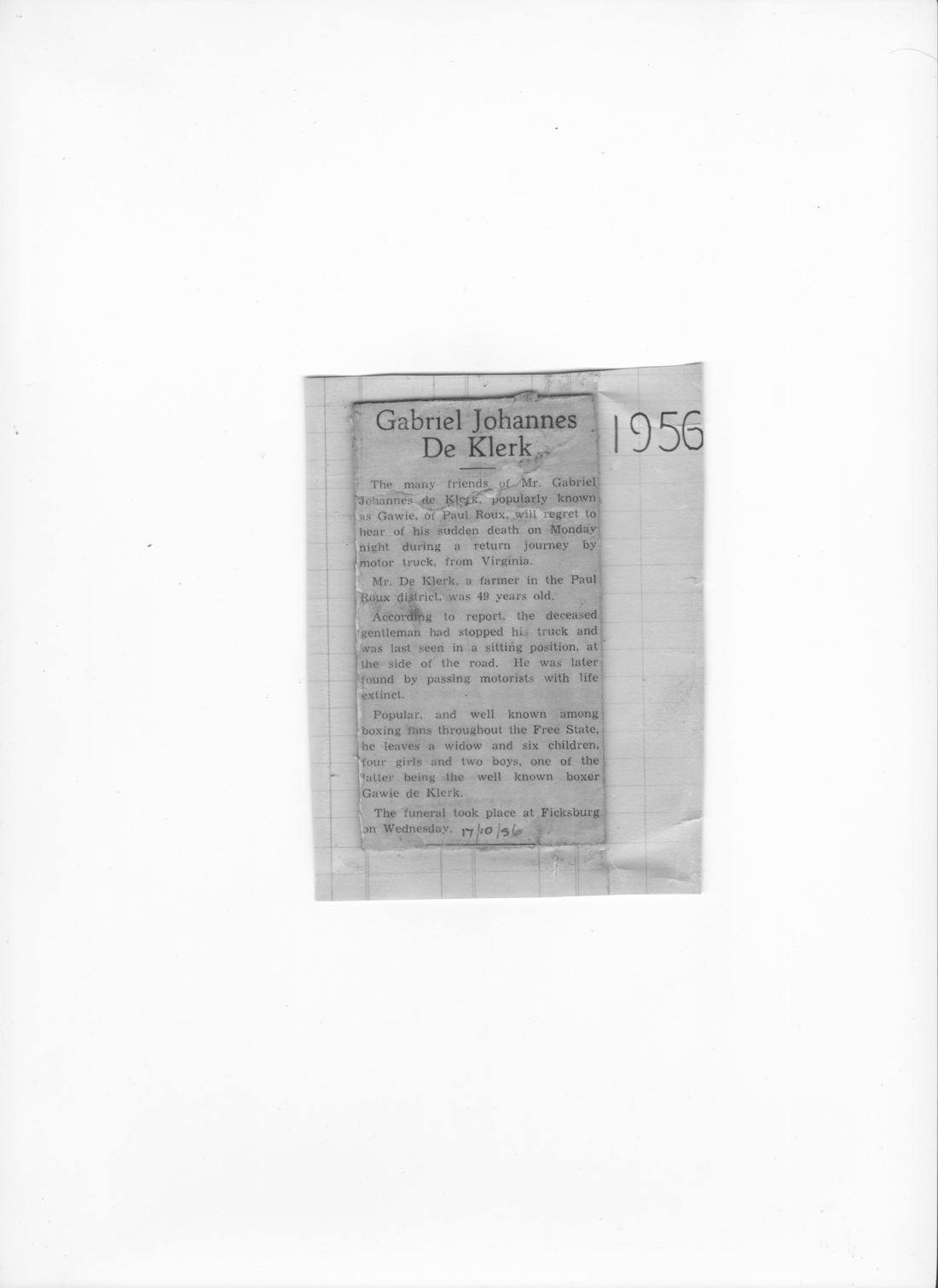
“…he leaves a widow and six children, one of the latter being the well-known boxer, Gawie de Klerk.”Death notice, 1956
Champion of South Africa
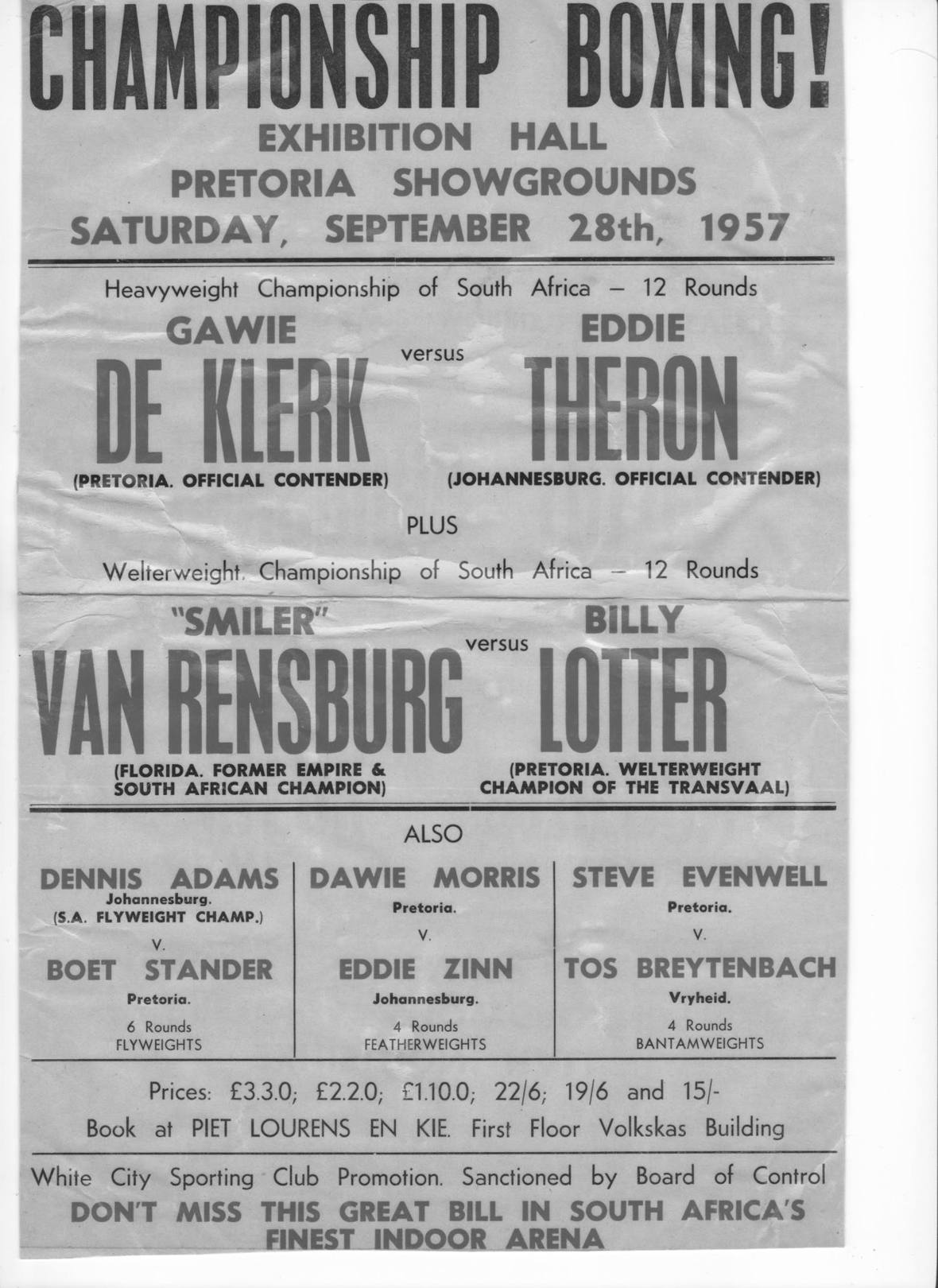
With the crown vacant, Pretoria’s Exhibition Hall billed the fight of the year.
On the night of 28 September 1957, before a packed house, Gawie de Klerk met Eddie Theron for the Heavyweight Championship of South Africa. Sixteen pounds the heavier man, he tore in from the opening bell and forced a fourth-round stoppage. A new champion smiled for the cameras beside his manager-trainer, Piet Lourens.
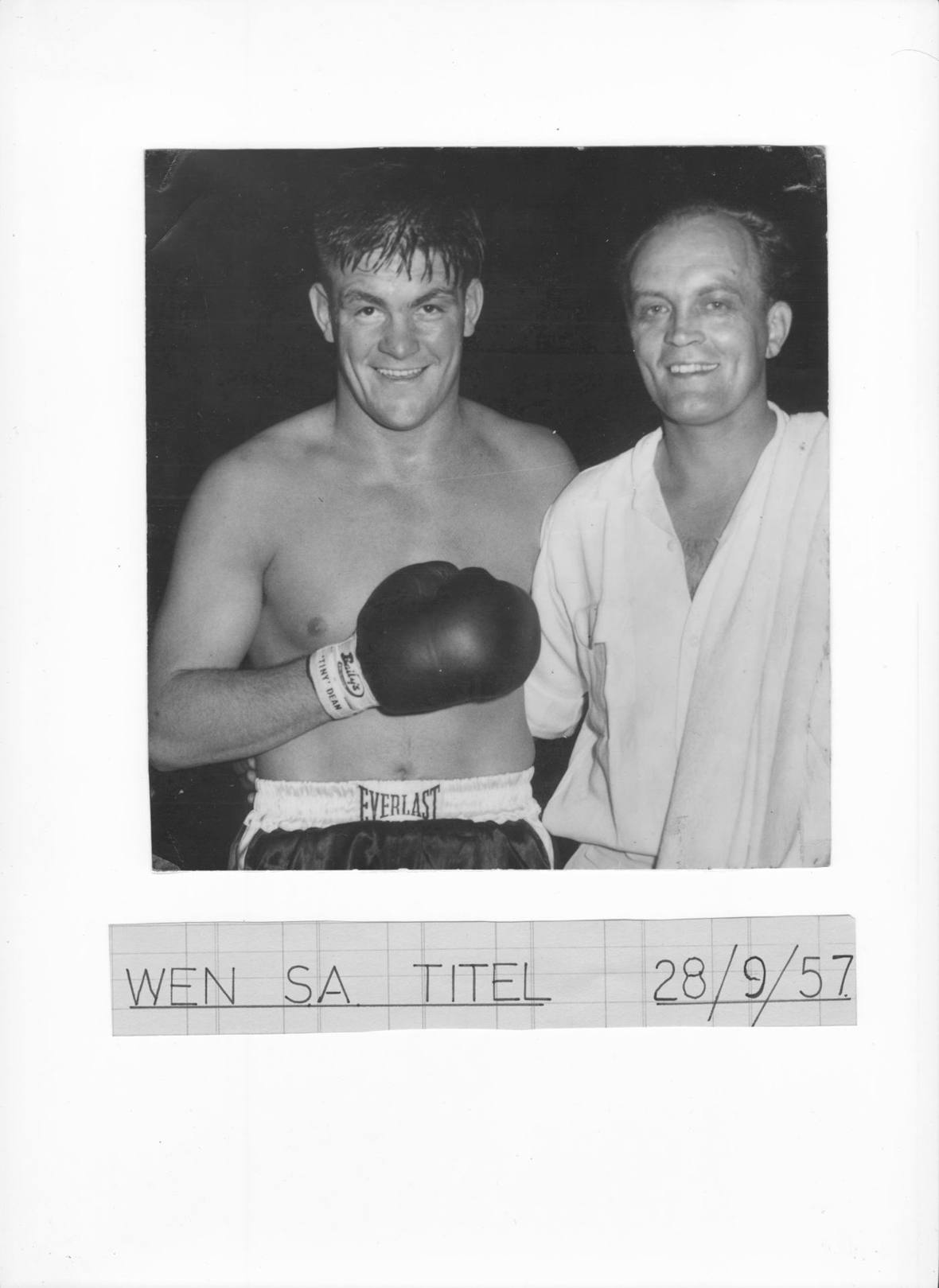
“Gawie de Klerk, Nuwe Kampioen.”New Champion. The morning papers, September 1957
Defending the Crown
Now the champion, he fought like one, aggressive, two-fisted, and willing to mix it with anyone.
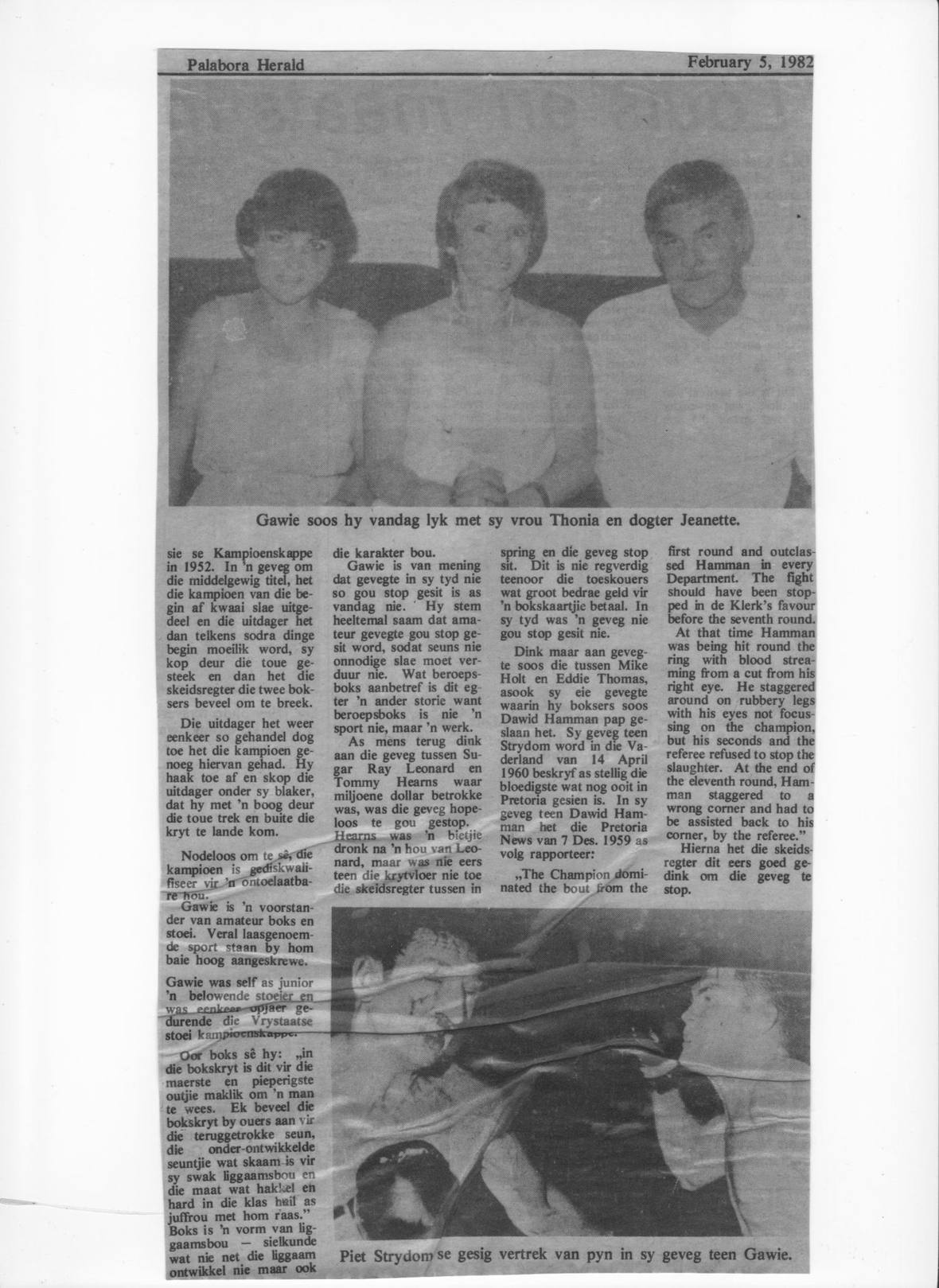
He battered the brave Jan Scheepers to a sixth-round stoppage, a photographer freezing the very instant of the blow. He overwhelmed Dawid Hamman so completely that the Pretoria News called for the fight to be halted rounds before the towel came in. And in April 1960 he won what Die Vaderland described as the bloodiest fight ever seen in Pretoria, against Piet Strydom.
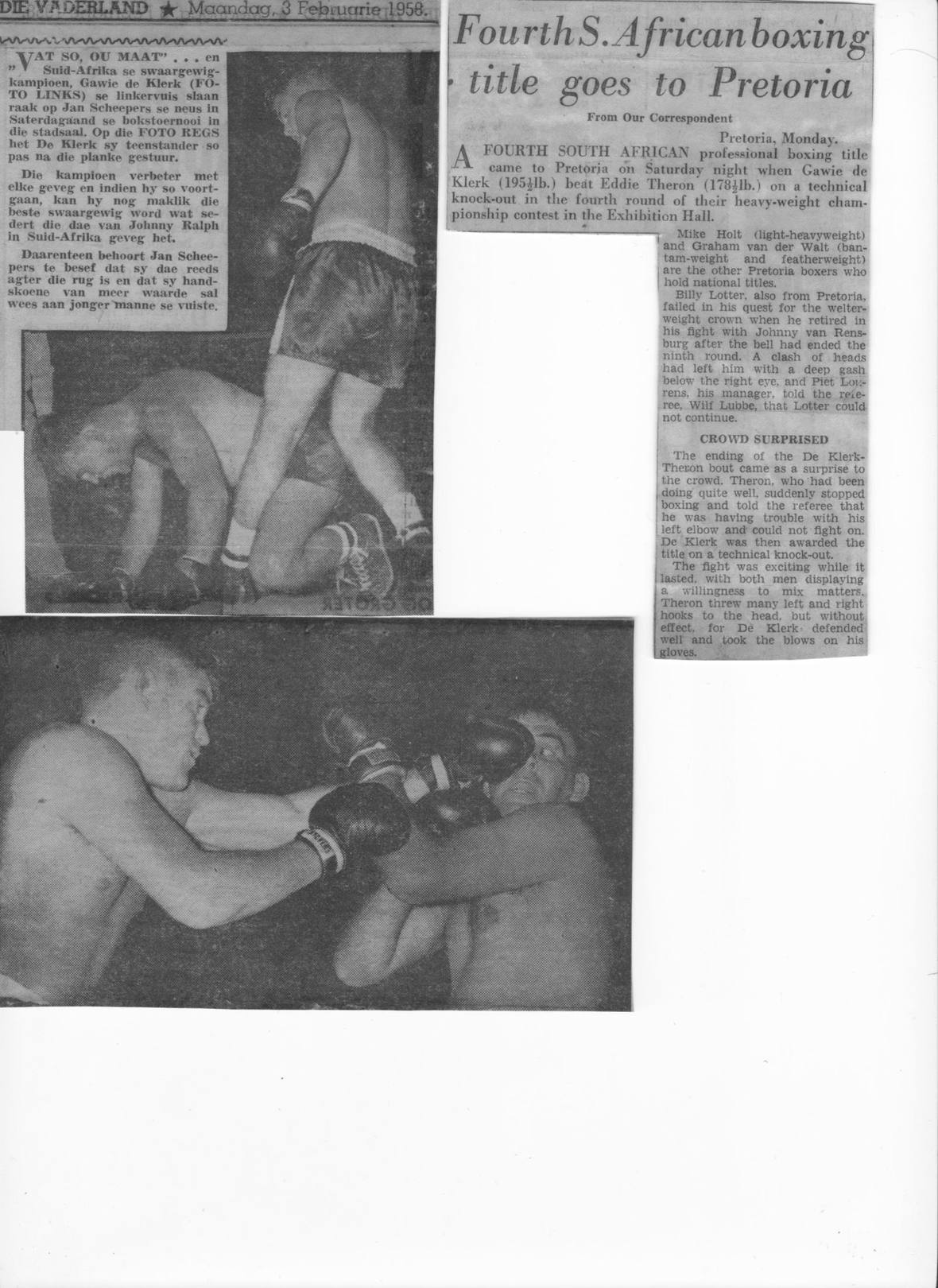
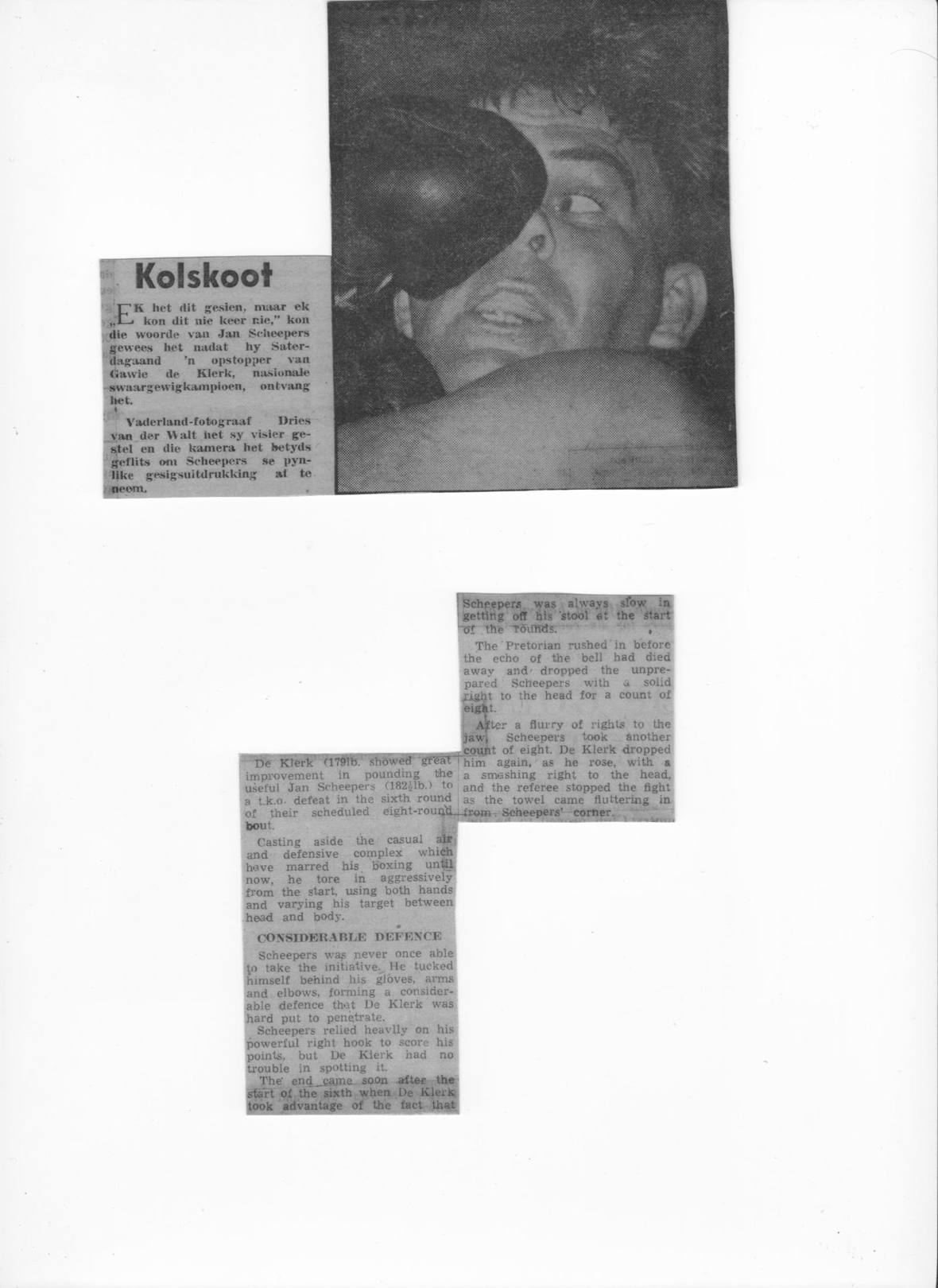
“The Champion dominated the bout from the first round and outclassed Hamman in every department.”Pretoria News, 7 December 1959
The European Campaign
Then the world got bigger. A South African champion went looking for the best in London and Italy.
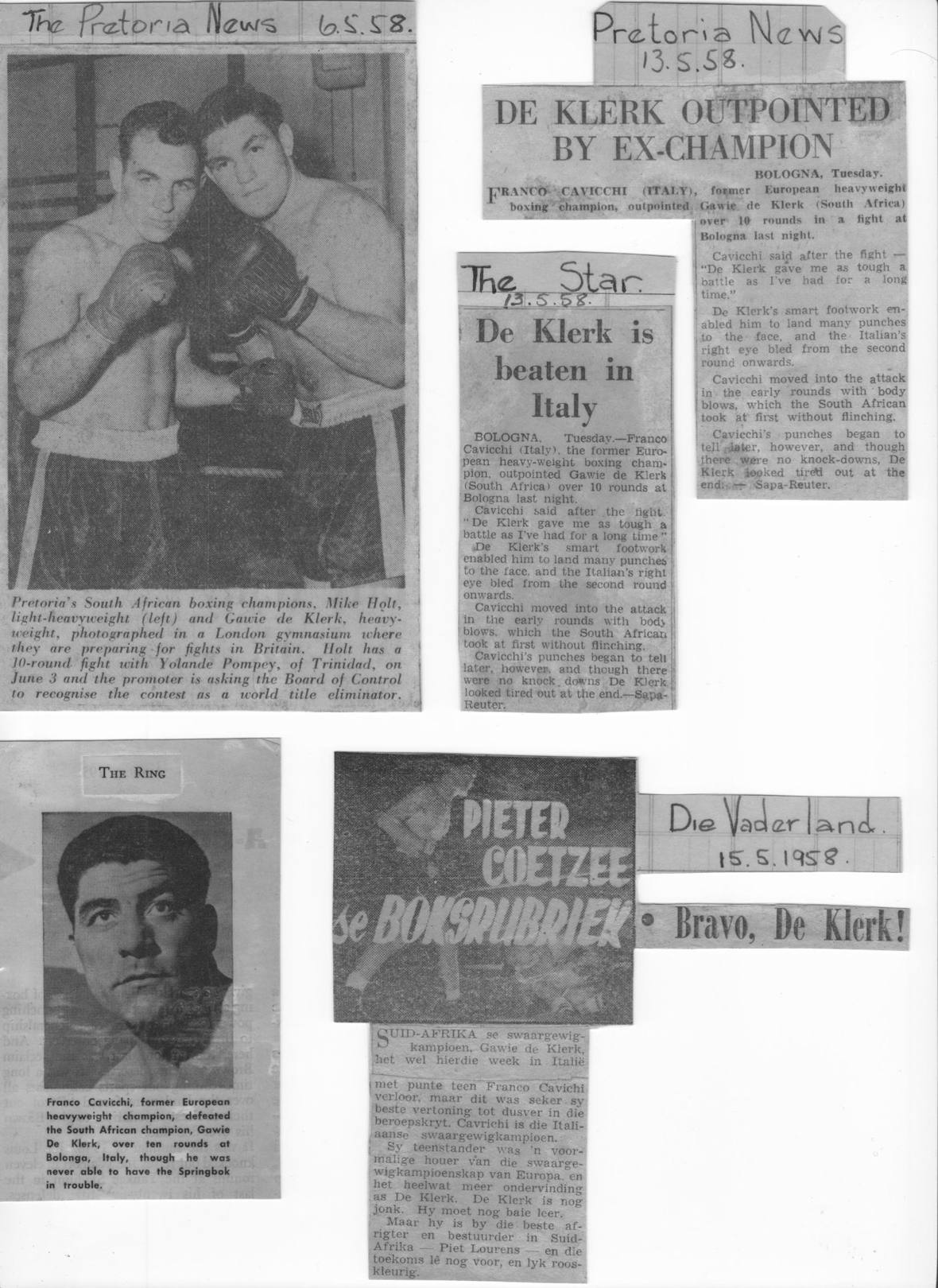
In a London gymnasium he trained beside Mike Holt, and stunned the British when, floored in the first round and giving away eighteen pounds, he climbed off the canvas to outpoint Peter Bates over eight. Then on to Italy, chasing a showdown with world-class Willie Pastrano: Bologna first, and Mestre, by the canals of Venice that he never forgot. He lost a hard ten rounds to former European champion Franco Cavicchi, who paid him the finest compliment a fighter can earn.
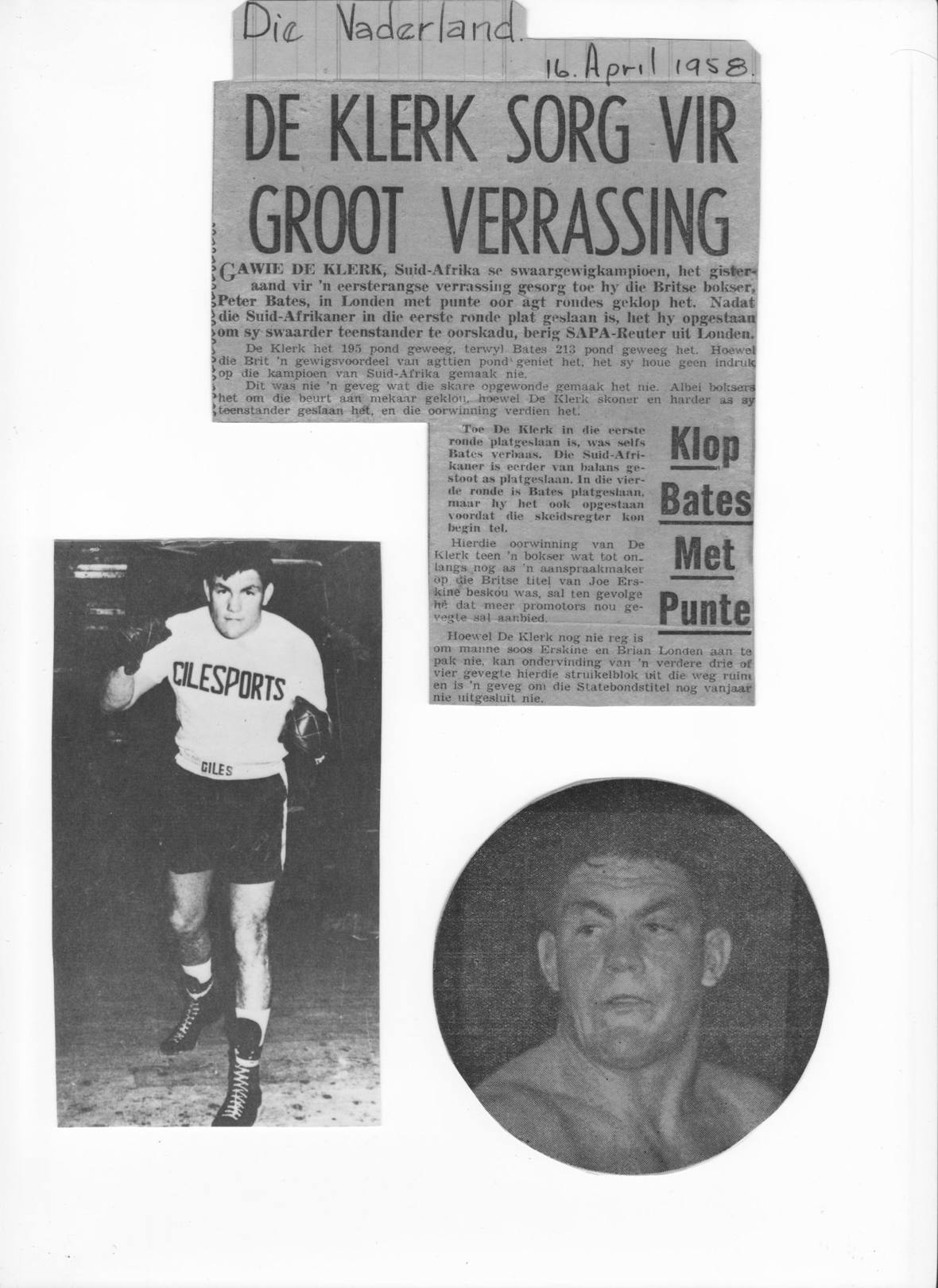
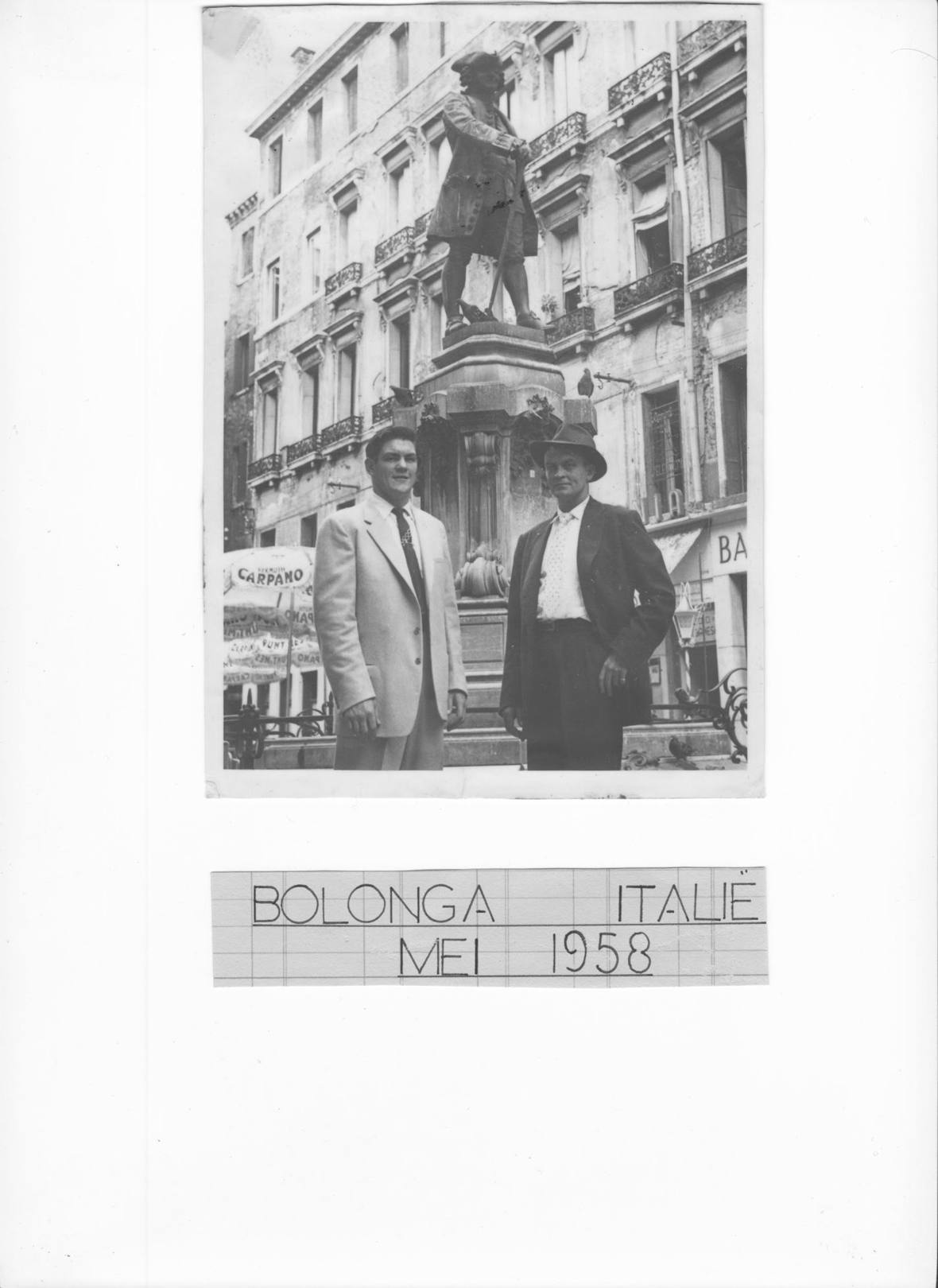
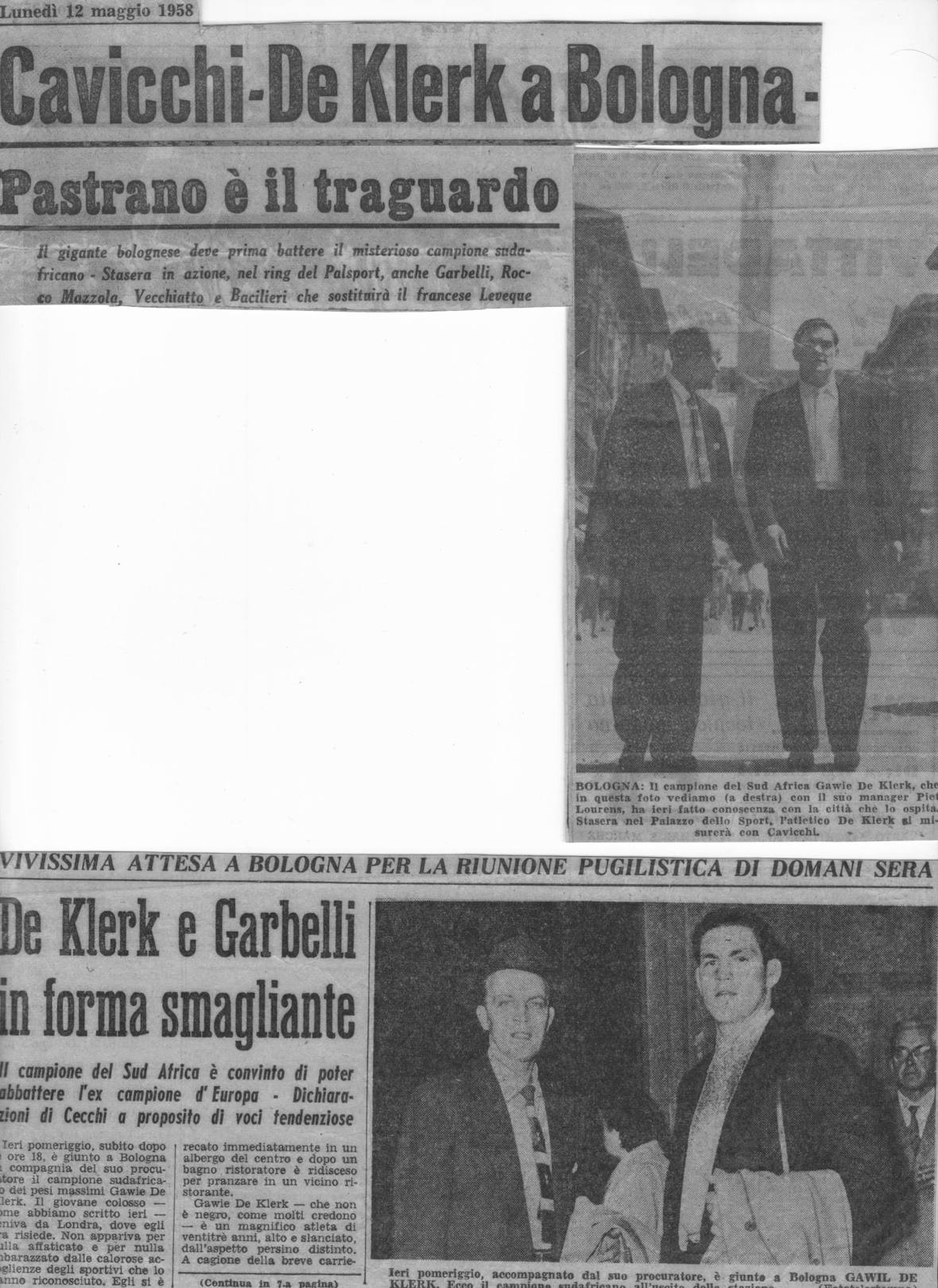
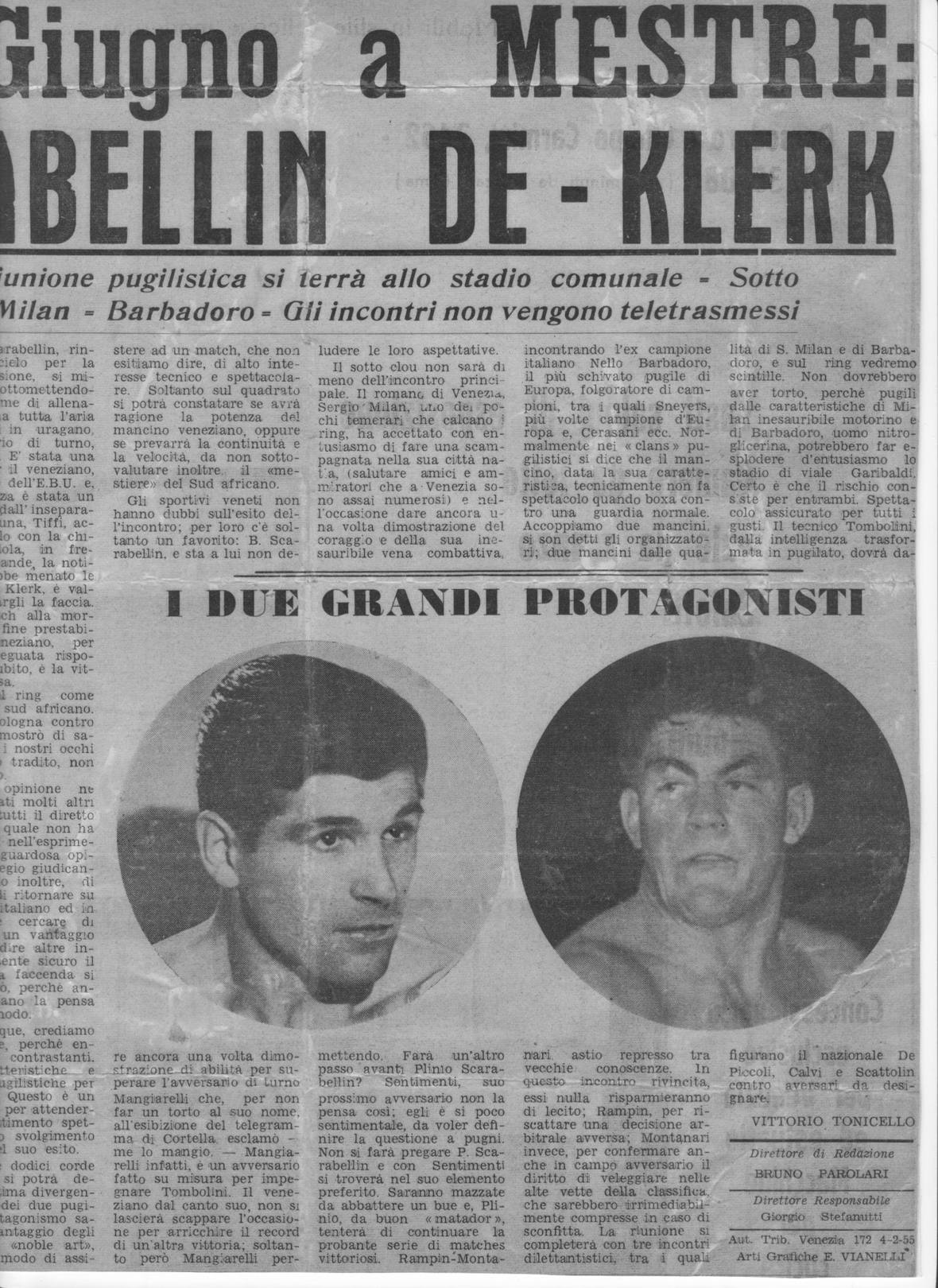
“De Klerk gave me as tough a battle as I’ve had for a long time.”Franco Cavicchi, former European Champion, Bologna, May 1958
Among the Greats
By 1961 his name sat in rare company indeed.
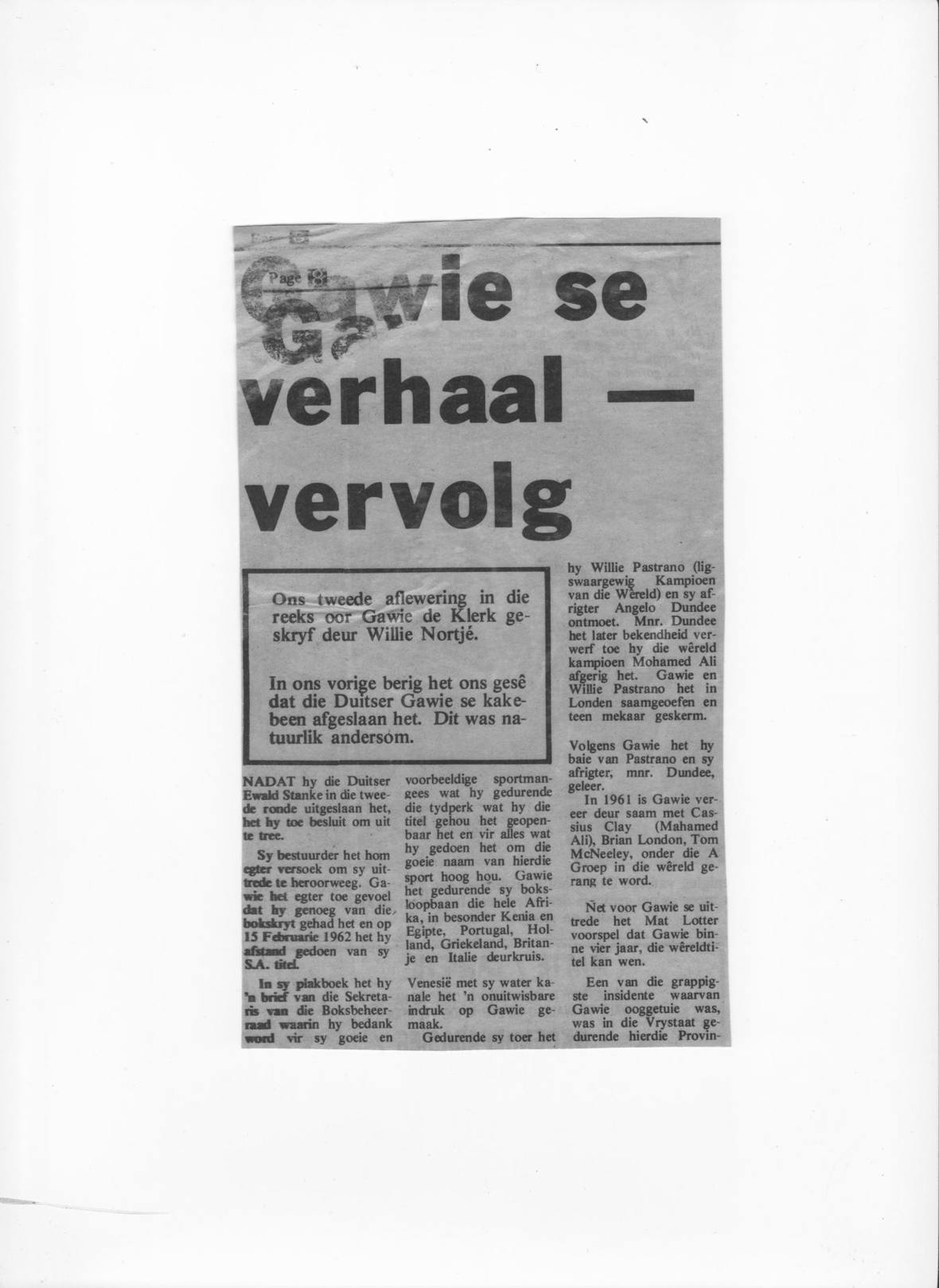
The world’s “A-Group” of heavyweights listed Gawie de Klerk alongside Cassius Clay, soon to be Muhammad Ali, Brian London and Tom McNeeley. In London he had sparred the world light-heavyweight champion Willie Pastrano, learning under a young cornerman named Angelo Dundee, who would one day guide Ali himself. One veteran trainer ventured a prophecy.
“Net voor sy uittrede het Mat Lotter voorspel dat Gawie binne vier jaar die wêreldtitel kan wen.”Just before he retired, Mat Lotter predicted Gawie could win the world title within four years.Gawie se Verhaal, 1982
The Final Bell
His last fight ended the way so many had, with an opponent on the canvas.
He stopped the German Ewald Stanke in the second round, and then, at the height of his powers, simply chose to walk away. On 15 February 1962 he relinquished the title he had defended five times over, and the Boxing Control Board sent a letter of thanks. He went home to his wife, Thonia, and to a quieter life, a champion who had carried the good name of his sport across Africa and Europe, and who held, for years, what was at the time the South African record for the fastest knockout: about twenty seconds, from first bell to last.
Five times champion of his country. Ranked among the finest heavyweights on earth. And, to the family that keeps this scrapbook, simply Gawie.